


Guatemala

CRS in Guatemala
Back to back Hurricanes Eta and Iota slammed into Central America, battering communities with powerful winds. The hurricanes have hit Nicaragua, Guatemala, Honduras, El Salvador and Mexico, causing devastation and loss for the entire region. Catholic Relief Services is on the ground, providing lifesaving assistance. Your gift today will support critical relief.
Guatemala has the highest population of all the countries in Central America and also the youngest, with almost half under the age of 19. CRS has been doing humanitarian work in Guatemala for more than 50 years, supporting food security, nutrition, health, agriculture, education, disaster risk reduction, and emergency response programs focused on the poorest and most vulnerable. CRS works through local partners to implement projects and interventions, a strategy that strengthens local capacity and skills and promotes sustainable solutions.
Our theory of change is grounded in the concept of integral human development, which supports individuals to reach their full potential in an environment of peace, social justice, and human dignity. It is the basis of our country program’s strategic framework, which is divided into four pillars:
· Agricultural Livelihoods Our projects support resilient agricultural livelihoods for smallholder farmers by focusing on agriculture and nutrition, nutrient-dense value chains, and soil and water quality.
· Integral Childhood & Youth Development CRS strives to create opportunities for children and youth, through holistic education and life skills formation that prepare them to earn sustainable livelihoods and to become the next generation of leaders in their communities.
· Emergency Response and Recovery CRS provides high-quality, rapid-response recovery and resilience support to disaster-affected communities. We engage with the communities to understand needs and encourage local, market-based responses for emergency recovery.
· Institutional Development We are committed to working alongside local partner institutions to develop and enhance organizational systems and governance, build the knowledge and skills of partner staff, and improve their capacity to access resources and influence systems and structures to achieve strategic goals.
There are four Cross-Cutting Areas implemented throughout the programs:
· Families with Dignity: The initiative is a values and education based program through which CRS seeks to provoke transformational change within the family unit, in favor of just relationships, improved communication and respectful dialogue between spouses and with children, and joint decision-making for the well-being and integral human development of the family.
· Savings and Internal Lending Communities: SILC’s community-based savings groups are promoted by CRS and partners to strengthen the livelihoods of the people we serve.
· Private Service Provision: In order to scale up SILC and other successful programs such as community-level veterinary services, CRS and its partners help to recruit and train community-based Private Service Providers (PSP). CRS and partners provide PSPs accompaniment for a set period of time and then they operate on their own, providing services for other community members in a sustainable way.
· Cross-Sector Engagement: CRS has worked for many years to “connect the dots” across myriad stakeholders—from local Church partners and governments to small-scale farmers and international businesses—to promote collaborative, mutually beneficial relationships. CRS's humanitarian work in Guatemala continues to promote this type of cross-sector engagement, with a particular focus on deepening our expertise in engaging more effectively with the private sector and universities to benefit the poor and vulnerable.
Today, the country program operates with an annual budget of approximately $18.5 million (USD) and depends on the hard work, effort, and dedication of more than 100 CRS Guatemala staff members working in Guatemala City and Quetzaltenango offices. CRS Guatemala also oversees a program office in Mexico.
Stats
People served: 975,961
Population: 16,581,273
Size: 42,042 sq mi; about the size of Tennessee
Our Partners
Become a Partner ›Country News and Stories
-
October 30, 2023
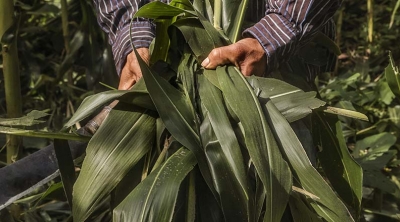
Giving Thanks for Farmers
Small-scale farms provide fresh, affordable food to their local communities and lead the way in protecting the land and water that sustain us all.
-
February 17, 2023
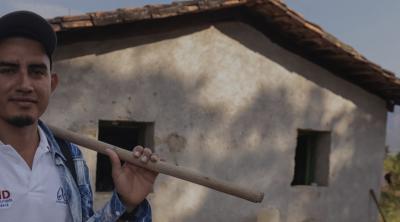
A Day in the Life
Cristian Leonardo Gómez is a young community leader in La Paz, Honduras, where he trained with the CRS RAÍCES project. Helping farmers get the most of limited rainfall is a central focus of the project funded by USAID’s...
-
February 16, 2023
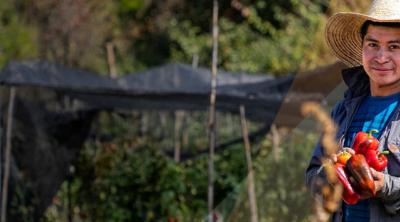
What the Farm Bill Makes Possible: Raúl’s Story
International food assistance programs authorized by the Farm Bill enabled Raúl to build a thriving farming business that supports his community.
-
June 2, 2021
In Guatemala, Most People Wouldn't Choose to Migrate, New Study Says
New study looks at factors keeping people in their home communities

CRS' History in Guatemala
Catholic Relief Services has worked in Guatemala since 1963. Initially, our work focused on humanitarian assistance to ease poverty and bring about a better standard of living for the needy. This included a food distribution program linked to education, mother-child health, agriculture, and reforestation activities in collaboration with the National Caritas Office in the 1970s. CRS also provided $13 million in food, medicine, and relief items to those affected by the 7.5-magnitude earthquake that killed 23,000 people and left many thousands homeless in 1976. Over the years, our scope has expanded to include implementing programs focused on food security, nutrition and health, sustainable agriculture, education, civil society, disaster risk reduction and emergency response.
View Another Region or Country
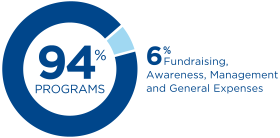
2023 Operating Expenses
Recognition
Trusted by charity rating agencies:


©2024 Catholic Relief Services228 W. Lexington St. Baltimore, Maryland 21201-3443877-435-7277[email protected]
Catholic Relief Services is a 501(c)(3) non-profit organization; Donations to CRS are tax-deductible to the full extent allowable under the law.
Catholic Relief Services eases suffering and provides assistance to people in need in more than 100 countries, without regard to race, religion or nationality.


We are the official overseas relief and development agency of the United States Conference of Catholic Bishops and a member of Caritas Internationalis.